

As Screen Time Extends Across Work and Home, AndaSeat Easter Campaign Turns Focus to Kaiser 3E

K3e banner
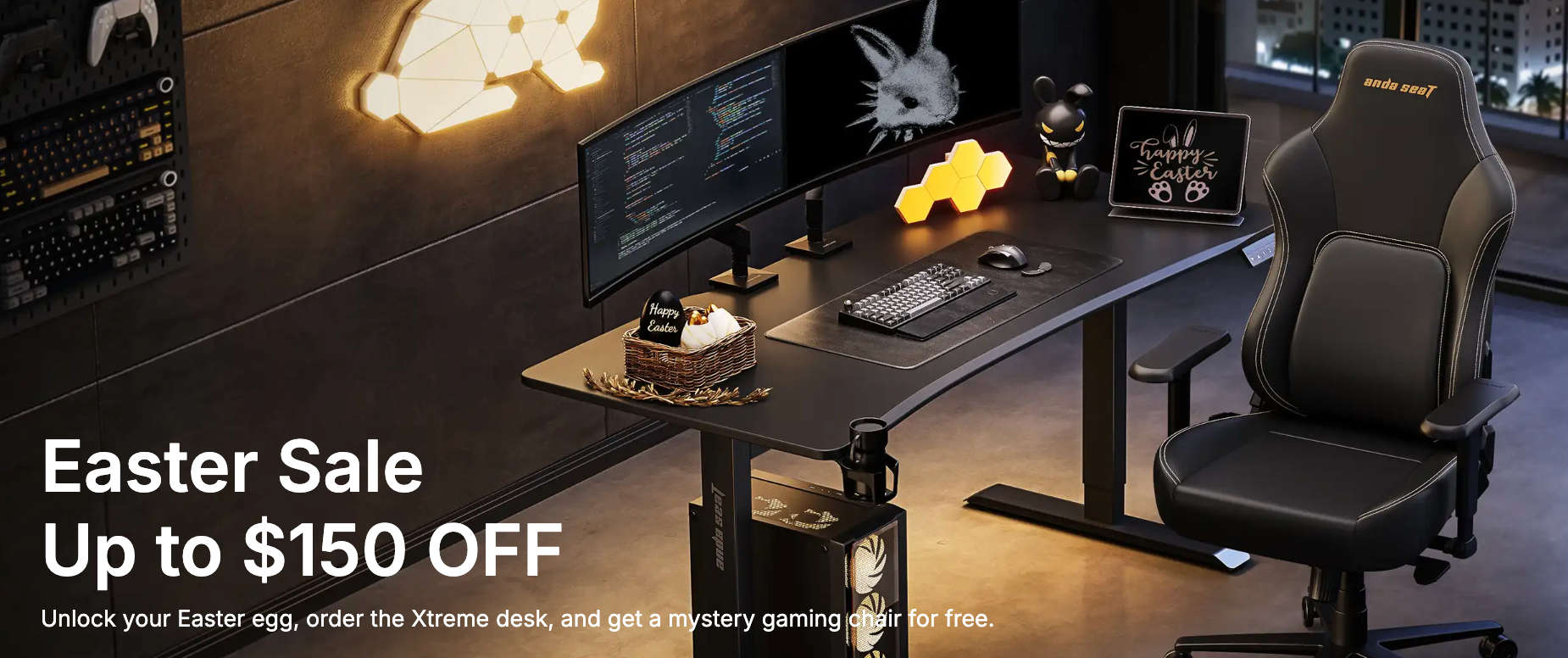
2026 Easter Sale AndaSeat

K3E AndaSeat Orange
As Screen Time Extends Across Work and Home, AndaSeat Easter Campaign Turns Focus to Kaiser 3E
SPOKANE, WA, UNITED STATES, April 7, 2026 /EINPresswire.com/ -- AndaSeat has launched its Easter Sale campaign with seasonal pricing across selected products, including messaging around savings of up to $150. The campaign also includes Easter-themed promotional activity tied to selected purchases. In this release, however, the company’s central product focus is the Kaiser 3E, a chair positioned around a broader consumer question that extends beyond a holiday sales window: how ergonomic seating should respond when users spend long hours moving between work, home, and gaming routines in the same environment.That question has remained relevant as screen-based habits continue to shape everyday life. The World Health Organization states that nearly one third of adults globally, or 31%, do not meet recommended physical activity levels, and it continues to frame sedentary behavior and inactivity as important public-health concerns. WHO also notes that adults should still be physically active even if they spend long periods sitting, because movement remains important for reducing health risks.
At the same time, public ergonomics guidance has reinforced that discomfort often builds through repeated exposure rather than one dramatic event. OSHA’s computer workstation guidance says that a properly adjusted workstation can help minimize awkward postures, and its materials repeatedly emphasize neutral positioning, equipment placement, and support for the back, arms, and wrists. NIOSH materials also note that static postures reduce blood flow and contribute to muscle fatigue, which is why workstations and tools should be designed to avoid prolonged awkward or fixed positioning.
For many consumers, this has changed the way seating is evaluated. The question is no longer only whether a chair feels supportive in one upright posture. It is increasingly whether that support remains usable when the same person leans forward to type, shifts during meetings, reclines briefly between tasks, or moves from office work into gaming later in the day. AndaSeat said the Kaiser 3E was developed with that broader pattern in mind.
Why Seating Expectations Have Shifted
In many home and hybrid setups, one chair is now expected to support several forms of use in a single day. A person may spend the morning answering messages and working at a keyboard, move into calls or video meetings in the afternoon, then use the same seat again later for gaming, media viewing, or general desktop use.
This overlap has made static seating assumptions less persuasive. A chair may perform well when the user is centered in one position, but daily use is rarely that fixed. Arm angle changes, torso angle shifts, and attention moves between different devices and activities. In smaller or mixed-use rooms, the chair has to support those transitions without forcing the user into constant workaround behavior.
Media and consumer attention has increasingly moved in that direction. The workstation is being understood less as a set of separate products and more as an interconnected environment. In that environment, the chair is not only judged by its appearance or a single comfort test, but by how well it supports repeated posture changes over time.
The Consumer Pain Point Behind Kaiser 3E
The frustration many users experience is often gradual. A workstation may appear acceptable at first, but discomfort can build as the day continues. Users lean forward when they lose back contact, raise the shoulders when arm support no longer feels aligned, or shift their lower back away from the chair when support feels too fixed or too shallow.
OSHA’s guidance on computer workstations highlights several of these familiar problems indirectly by focusing on easy reach, proper support, and reducing awkward posture. NIOSH likewise points to the risks associated with prolonged static positioning. Together, that public guidance has helped make one point clearer: ergonomic support is less useful if it only works under one narrow condition.
AndaSeat said the Kaiser 3E was designed in response to that broader pattern rather than to a single isolated complaint. The chair was developed for users who need support that remains practical across repeated task changes and long-duration use.
How AndaSeat Frames Kaiser 3E
According to AndaSeat, Kaiser 3E is an ergonomic chair developed for work, home, and gaming environments. The company positions it as a model intended to combine long-session support with a setup that remains adaptable enough for mixed daily routines.
A central part of that design is the chair’s integrated lumbar support, which AndaSeat lists at 4.8 cm. The company also states that Kaiser 3E uses 11 cm cold-cure foam, a CNC steel frame, 4D armrests, and a magnetic memory foam head pillow. AndaSeat presents these features as part of a broader seating system rather than as isolated upgrade points.
In product terms, this means the chair is framed around continuity. Back support, arm positioning, seat structure, and upper-body support are intended to work together for users who do not treat typing, meetings, breaks, and gaming as separate categories requiring separate furniture.
Why the Integrated Lumbar Matters
One of the more practical issues in everyday seating is that users do not consistently maintain perfect contact with the backrest throughout the day. They shift forward during focused tasks, sit back again when reading or reviewing, and adjust their lower-back relationship to the chair repeatedly.
AndaSeat said the integrated lumbar design in Kaiser 3E was developed to make support feel more immediately available without requiring major setup changes each time posture shifts. In that sense, the chair’s lumbar concept aligns with the wider consumer concern around reduced friction: users want support that is present and usable, not support that feels theoretically correct but difficult to maintain in practice.
The significance of that design choice becomes more visible in mixed-use settings, where the same person may not want to recalibrate the chair for every new activity. Kaiser 3E is therefore positioned as a response to the expectation that ergonomic support should be more consistent across routine transitions.
Structure, Foam, and Long-Session Use
AndaSeat also ties Kaiser 3E to durability and pressure management. The company states that the chair uses 11 cm cold-cure foam and a CNC steel frame, indicating a design emphasis on maintaining structure under regular long-term use.
From a consumer standpoint, that matters because discomfort is not always caused by posture alone. It can also come from seating that loses consistency during longer sessions, particularly in setups where the chair is used for many hours across different forms of screen time. The chair’s structural choices are presented as a way to maintain support logic over time rather than only at the point of first use.
This framing also matches how consumers increasingly assess workstation purchases. A chair is no longer judged only in a short showroom-style impression. It is judged by how it performs after repeated use in a real setting where work and leisure overlap.
Upper-Body Support and Task Switching
OSHA’s public workstation materials repeatedly point to arm, wrist, and shoulder positioning as important components of ergonomic setup, especially where keyboards and pointing devices are used for extended periods. In that context, armrest design becomes relevant not as a luxury detail, but as part of how the chair supports different upper-body demands across the day.
AndaSeat states that Kaiser 3E includes 4D armrests and a magnetic memory foam head pillow. Within the company’s product logic, these features are meant to support the fact that desk use is rarely uniform. The arm position used for typing is not the same as the one used during controller-based gaming or passive viewing. Likewise, head and neck support may matter differently during active work than during short in-seat recovery.
By including these adjustments in the overall chair design, AndaSeat positions Kaiser 3E around a familiar consumer need: one chair that can remain supportive as task type changes, rather than one that works well only in a single posture.
Why Kaiser 3E Fits the Easter Timing
Although Easter campaigns are often understood mainly as retail moments, they also arrive during a season when many households reorganize rooms, reassess desk setups, and revisit furniture decisions that may have been postponed. In that environment, a chair like Kaiser 3E can be framed not only as a product inside a seasonal campaign, but as part of a wider effort to improve how work and leisure spaces function.
AndaSeat’s Easter messaging provides the campaign backdrop, but the broader product story in this release is tied to a more durable issue. Consumers are still managing long hours at screens, often in rooms that must support several activities at once. That makes the Easter timing relevant as a moment of reassessment, while the underlying news angle remains centered on seating expectations and the limits of static support.
A Chair Designed for Overlapping Routines
What distinguishes the Kaiser 3E story from a conventional holiday promotion is the way it connects the product to the overlap now common in daily routines. One chair may need to support office work, calls, gaming, media use, and short moments of recovery in the same physical setup.
AndaSeat said Kaiser 3E was developed with that overlap in mind. In the company’s framing, the chair reflects a wider change in ergonomic demand: consumers increasingly want seating that does not only look supportive on paper, but remains coherent as posture and activity shift throughout the day.
About the Easter Sale
AndaSeat’s Easter Sale includes seasonal pricing across selected products and campaign messaging around savings of up to $150. The campaign also includes Easter-themed promotional activity linked to selected purchases. In this release, however, the company’s emphasis remains on Kaiser 3E’s design relevance within current workstation habits rather than on promotional language alone.
About AndaSeat
Founded in 2007, AndaSeat develops ergonomic furniture products for gaming, work, and home environments. Its product portfolio includes ergonomic chairs, desks, and related workspace products designed for hybrid users, home setups, and gaming spaces.
Caroline Chen
AndaSeat
+ + 86 139 2232 2347
email us here
Visit us on social media:
LinkedIn
Instagram
Facebook
YouTube
TikTok
X
Legal Disclaimer:
EIN Presswire provides this news content "as is" without warranty of any kind. We do not accept any responsibility or liability for the accuracy, content, images, videos, licenses, completeness, legality, or reliability of the information contained in this article. If you have any complaints or copyright issues related to this article, kindly contact the author above.
